
How to calculate the Tax-Free Childcare government top-up
Learn how the Tax-Free Childcare top-up is calculated, including how much to pay into your childcare account and how the government contribution is applied. Check current scheme, ‘
The TFC Calculator Editorial Team
Source-checked childcare costs and support guidance
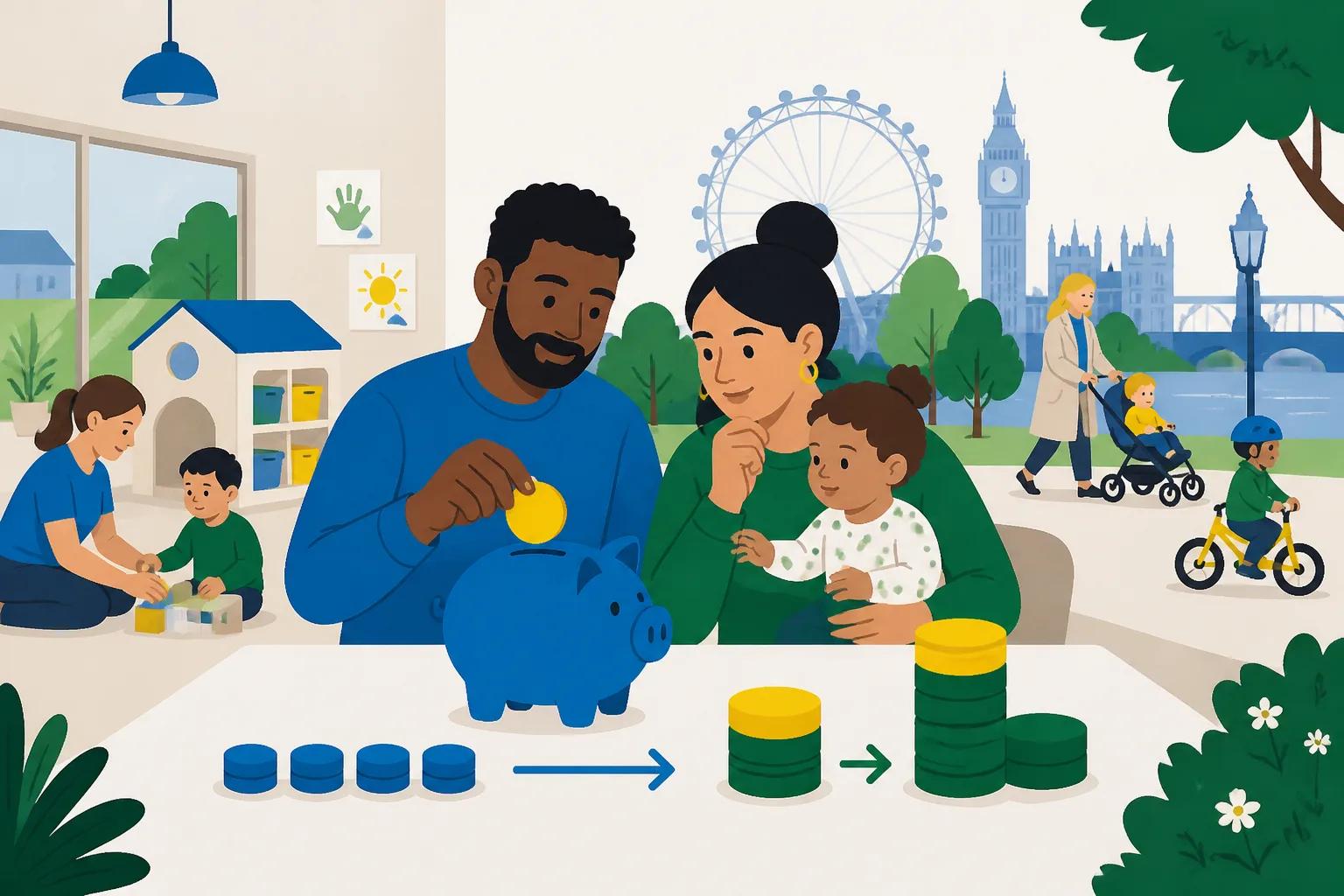
A nursery invoice lands just as the household bills are due. You know Tax-Free Childcare can help, but how much should you actually pay into your childcare account to cover it?
The short answer is: if you have enough top-up allowance left, pay in 80% of the eligible bill. The government adds the other 20%. There is a cap for each child, though, so a larger bill needs one extra calculation. Here is how to work it out without mistaking an estimate for a guarantee.
The £8 plus £2 rule
For every £8 you pay into a Tax-Free Childcare account, the government adds £2. That gives you £10 to pay an approved childcare provider. In other words, the top-up is 20% of the amount you pay the provider, not 20% of your deposit.
For example, if an eligible bill is £250 and you have enough allowance left:
- You pay £200 into your childcare account.
- The government adds £50.
- You pay your provider £250 from the account.
The GOV.UK Tax-Free Childcare guide uses this same example. A useful way to check your arithmetic is that the government’s £2 is 25% of your £8 deposit, but only 20% of the resulting £10 bill.
Two quick formulas
Assuming the whole bill is eligible, you have no money already in the account, and you have not reached the top-up cap:
- Your deposit: childcare bill × 80%
- Government top-up: childcare bill × 20%
For a £73 bill, that means £73 × 80% = £58.40 from you, while £73 × 20% = £14.60 from the government.
Practical next step: Start with the amount your provider will actually charge for eligible childcare, rather than an average monthly figure from your budget.
Check the cap before relying on the 20%
The government top-up is limited for each child to £500 every three months, up to £2,000 a year. For a child who qualifies under the scheme’s disability rules, those limits rise to £1,000 every three months and up to £4,000 a year, according to GOV.UK.
Here is what those three-month limits mean when you are planning payments:
| Top-up limit for one child | Your contribution at the £8-to-£2 rate | Total childcare covered at that rate |
| --- | ---: | ---: |
| Standard: £500 | £2,000 | £2,500 |
| Qualifying disabled child: £1,000 | £4,000 | £5,000 |
This is not a £500 monthly allowance. Nor is the annual maximum an amount you can assume will be added to one large invoice.
Example: a nursery bill above the standard cap
Suppose your eligible nursery charges total £2,704 over a three-month period. Assume this is for one child, you are eligible throughout, the account starts empty, and none of that period’s top-up has been used.
On the first £2,500 of costs, you could contribute £2,000 and receive the maximum £500 top-up. The remaining £204 has no further top-up available for that period. Your share of the full bill would therefore be £2,000 + £204 = £2,204, with £500 from the government.
If you had already used £300 of the top-up allowance in that three-month period, you would have only £200 of that cap left. Check your account balance and available top-up before deciding what to transfer.
Example: a qualifying disabled child
Suppose eligible costs are £4,000 over three months for a child who meets the scheme’s disability criteria. Assume an empty account, continuing eligibility and no top-up already used in the period.
At the £8-to-£2 rate, your contribution would be £3,200 and the government top-up £800. That is below the £1,000 three-month limit. If costs instead reached £5,000 on the same assumptions, £4,000 from you plus the maximum £1,000 top-up would cover them.
The higher cap is not automatic just because a child needs additional support. Check the Tax-Free Childcare eligibility rules for the disability criteria.
Work from your real invoice, not a perfect month
Working parents rarely get twelve identical childcare bills. A return-to-work date, a longer nursery day or a school holiday can change the amount you owe. The calculation still starts with the eligible cost you need to pay.
For example, imagine a child’s nursery bills are £900, £1,200 and £1,400 across three months. Assume every charge is eligible, you have no account balance or top-up already used, and you remain eligible.
- Add the bills: £900 + £1,200 + £1,400 = £3,500.
- Calculate 20%: £3,500 × 20% = £700.
- Apply the standard three-month cap: the top-up is limited to £500.
- Budget for your share: £3,500 − £500 = £3,000.
If you had simply set aside 80% of every invoice, you would have budgeted £2,800 and been £200 short. That is why it helps to forecast the whole three-month period when costs are high, rather than treating each invoice in isolation.
For a smaller, school-age bill, the cap may not be an issue. Assume an approved after-school club charges £7.50 an hour for two hours a day, three days a week, over 12 weeks. The cost is 2 × £7.50 × 3 × 12 = £540. With enough top-up allowance left, you would contribute £432, the government would add £108, and the account could pay the £540 bill.
Tax-Free Childcare can be used for approved breakfast, after-school and holiday clubs as well as nurseries and childminders. That makes it worth checking again when a child starts school, even if nursery fees are behind you.
Make sure you are calculating an eligible bill
A correct percentage applied to the wrong costs is still a misleading estimate. Your provider must be approved and signed up to Tax-Free Childcare. Ask them before you plan to pay an invoice from the account. The GOV.UK guidance on approved childcare explains how to check providers in England, Wales, Scotland and Northern Ireland.
You may be able to include extras such as meals, nappies or trips when your childcare provider supplies them. You cannot use Tax-Free Childcare to pay for a child’s compulsory education. If an invoice mixes different charges, ask the provider which amounts can be paid through your childcare account.
There is an eligibility check for your family, too. Tax-Free Childcare generally supports working parents, including people who are employed or self-employed. Your child must usually live with you, and you cannot claim for a foster child. GOV.UK says a child is eligible until the September after they turn 11, or after they turn 16 if they meet the disability rules.
You and your partner, if you have one, must generally each meet a minimum expected earnings test. The amount depends on age; GOV.UK currently lists £2,643.68 before tax over the next three months for someone aged 21 or over. It also says you cannot claim if either partner’s expected adjusted net income is over £100,000 for the current tax year. There are exceptions and other conditions, so use the official eligibility check, particularly if you are starting work, on leave or self-employed. A cost calculation cannot decide your entitlement.
How funded hours and other support affect the maths
If your child receives funded childcare hours, calculate the top-up on the eligible bill you still have to pay, not on hours the provider is not charging you for.
For instance, suppose a provider’s eligible charge after funded hours have been accounted for is £300. Assuming you have enough top-up allowance left and an empty account, you would pay in £240 and the government would add £60. Ask your provider for an invoice that makes the remaining charge clear.
England’s Free Childcare for Working Parents scheme can provide eligible children aged nine months to four years with 30 hours a week for 38 weeks of the year. England also has 15 hours a week for 38 weeks for three- and four-year-olds outside that working-parent offer. Do not assume those English hours apply unchanged across the UK: Scotland, Wales and Northern Ireland have their own childcare schemes. HMRC’s technical overview confirms that Tax-Free Childcare can be used alongside qualifying funded-hours schemes.
Universal Credit and childcare vouchers need a separate comparison. You cannot receive Tax-Free Childcare at the same time as either of those forms of support. If you already receive one, check the official rules and compare your options before switching; do not add a Tax-Free Childcare top-up to a budget that assumes you will keep it.
From calculation to payment: a short checklist
- Get the actual charge. Ask your provider for the amount due and confirm that they are approved and signed up to Tax-Free Childcare.
- Check eligibility and your account. Look at your available balance and top-up already received for each child.
- Calculate your share. For costs within the cap, multiply the eligible bill by 80%. For higher costs, allow for the unused top-up cap and budget to cover the difference yourself.
- Pay in with time to spare. GOV.UK says you can fund the account by Direct Debit, standing order or bank transfer. Your payment will usually appear within one working day, with the government payment added at the same time. Then pay your provider from the account.
- Put a reminder in your calendar. You must sign in every three months to confirm your details are up to date or your Tax-Free Childcare will stop.
A calculator can make the arithmetic quicker: enter the eligible amount left to pay, then check its estimated top-up against the allowance you actually have left in your account. That gives you a useful payment plan, not an entitlement decision.
Your next step: take your next invoice, mark the eligible charges, and calculate both 80% of that bill and your expected total for the three-month period. A couple of minutes with those two figures can prevent a surprise shortfall when a larger childcare bill arrives.