
Chain Nursery vs Independent Nursery: Pros, Cons, and Cost Comparisons for UK Parents
Explore the differences between chain nurseries and independent nurseries in the UK. Learn about the pros and cons, cost implications, and how to choose the right option for your family’s childcare needs.
The TFC Calculator Editorial Team
Source-checked childcare costs and support guidance
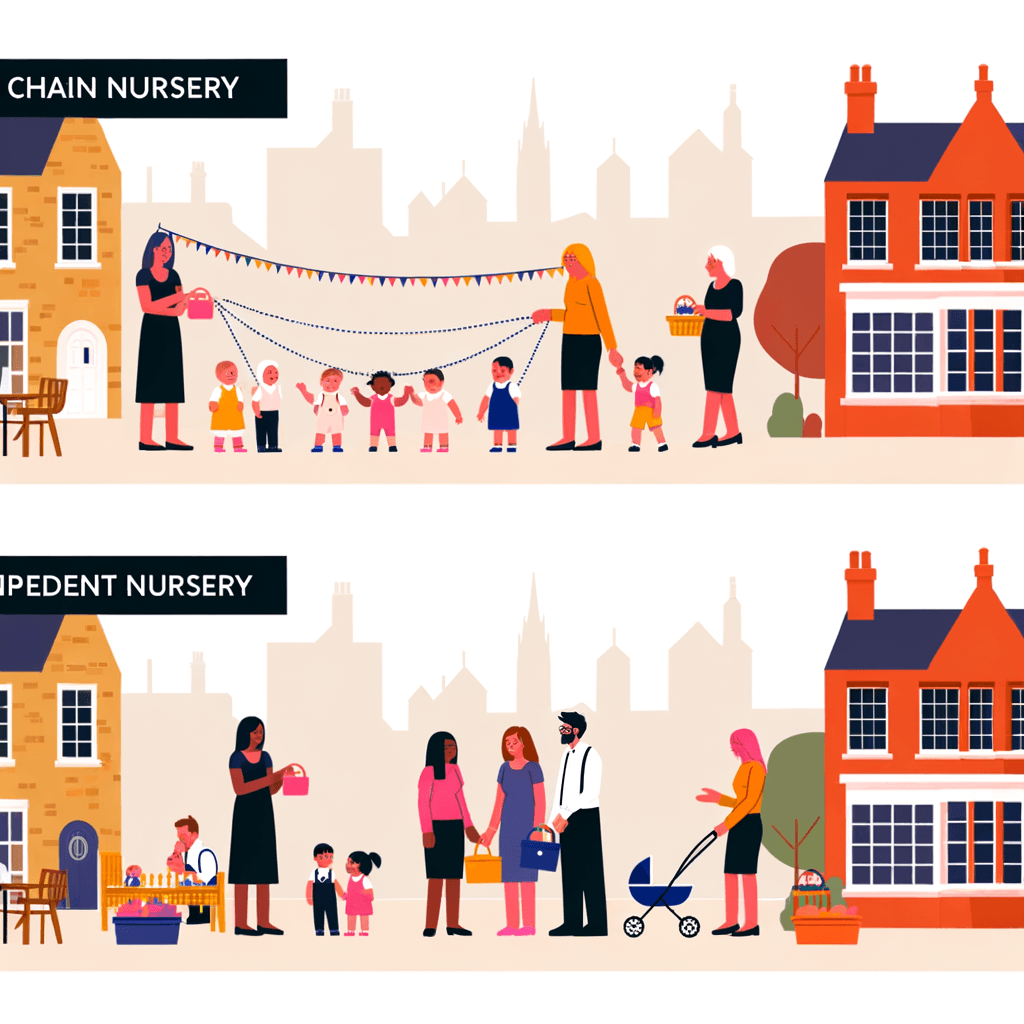
Choosing the right nursery for your child is a significant decision for any parent. With so many options available, it can be challenging to decide between a chain nursery and an independent nursery. This blog post will explore the differences between these two types of nurseries, consider the pros and cons, and provide a cost comparison to help UK parents make an informed choice.
Understanding the Basics
Chain Nurseries
Chain nurseries are part of a larger group or franchise, often with locations across the UK. These nurseries follow a standardized approach to childcare, ensuring uniform quality and operations across all branches.
Pros of Chain Nurseries:
- Consistency: Standardized policies and procedures ensure consistent quality.
- Resources: Typically have access to more resources and facilities due to larger budgets.
- Reputation: Often well-known, providing a sense of security for parents.
Cons of Chain Nurseries:
- Less Personalized: With standardized approaches, there can be less flexibility to tailor experiences to individual needs.
- Higher Staff Turnover: Larger organizations might experience higher staff turnover, affecting continuity of care.
Independent Nurseries
Independent nurseries are standalone businesses often run by individuals or small groups. They offer unique approaches and personalized care for children.
Pros of Independent Nurseries:
- Personalized Care: Often offer tailored experiences and are more adaptable to individual children's needs.
- Community Feel: Tend to have a more homely and community-focused environment.
- Stable Staff: Generally, lower turnover as staff are often more invested in the nursery's success.
Cons of Independent Nurseries:
- Variable Quality: Quality can vary significantly from one independent nursery to another.
- Limited Resources: May have fewer resources compared to larger chains.
Cost Comparisons
Childcare costs can be a significant part of a family's budget. Understanding the cost implications of choosing a chain or independent nursery is crucial.
Regional Cost Variations
Childcare costs vary significantly across the UK. For example, London parents often face higher fees compared to those in other regions. According to recent data:
- London: Chain nursery fees can range from £70 to £150 per day, while independent nurseries might charge between £60 to £130.
- Outside London: Chain nurseries range from £50 to £100, while independent nurseries can be £40 to £90 per day.
Government Support and Tax-Free Childcare
The UK government offers several schemes to help with childcare costs:
- Tax-Free Childcare: Eligible families can save up to £2,000 per child per year. This scheme is applicable to both chain and independent nurseries.
- 15/30 Hours Free Childcare: Available for 3 and 4-year-olds, providing 15 or 30 hours of free childcare per week during term time.
- Universal Credit Childcare Element: Covers up to 85% of childcare costs for eligible families.
Pro Tip: Use the UK government’s childcare calculator to determine eligibility and potential savings.
Quality Standards
Both chain and independent nurseries must adhere to the standards set by Ofsted, which regularly inspects and rates childcare providers in England. However, the way these standards are implemented can differ:
- Chain Nurseries: Often have structured programs that align closely with Ofsted requirements and corporate policies.
- Independent Nurseries: While they must meet the same standards, they might offer more creative curriculum designs tailored to individual children.
Practical Steps for Choosing the Right Nursery
When deciding between a chain and independent nursery, consider the following steps:
- Visit Multiple Nurseries: Get a feel for the environment and observe interactions between staff and children.
- Check Ofsted Reports: Look for recent inspection reports to ensure the nursery meets quality standards.
- Ask About Staff Turnover: Stability in staff can significantly affect your child’s experience.
- Consider Your Child’s Needs: Does your child thrive in structured environments, or do they benefit from more personalized care?
- Budget Evaluation: Assess your budget and explore government childcare support to offset costs.
Real-World Scenarios
Imagine you’re a working parent in London. You value consistency and have a hectic schedule, so a chain nursery might be ideal due to its predictable policies and multiple locations. However, if you live in a rural area where community ties are strong, an independent nursery might offer the personalized care and community feel you prefer.
Budgeting Example
For a family with a single child attending nursery full-time (5 days a week), the difference in annual costs could be significant:
- Chain Nursery in London: Approx. £35,000 per year.
- Independent Nursery in London: Approx. £30,000 per year.
By incorporating Tax-Free Childcare, potential annual savings could be £2,000, reducing costs to £33,000 and £28,000, respectively.
Next Steps for Parents
Choosing between a chain and independent nursery involves balancing quality, cost, and your child’s individual needs. Here are some actionable steps:
- Use the Childcare Calculator to understand your financial options.
- Schedule Visits to nurseries and bring a checklist of questions.
- Consult Other Parents for firsthand experiences and recommendations.
- Evaluate Flexibility Needs: Consider your work schedule and potential need for emergency childcare.
By considering these factors and utilizing available resources, you can make an informed decision that supports both your child’s development and your family’s financial well-being. Remember, the right choice will depend on your unique circumstances and priorities.